

Forged bank notes have plagued economies for centuries, but some counterfeiting operations reached such staggering scales that they threatened national security and destabilized entire financial systems. From Nazi Germany’s sophisticated wartime plot to modern-day supernotes, the history of forged bank notes reveals both human ingenuity and criminal ambition at its most extreme.
Operation Bernhard: The Largest Counterfeiting Operation in History
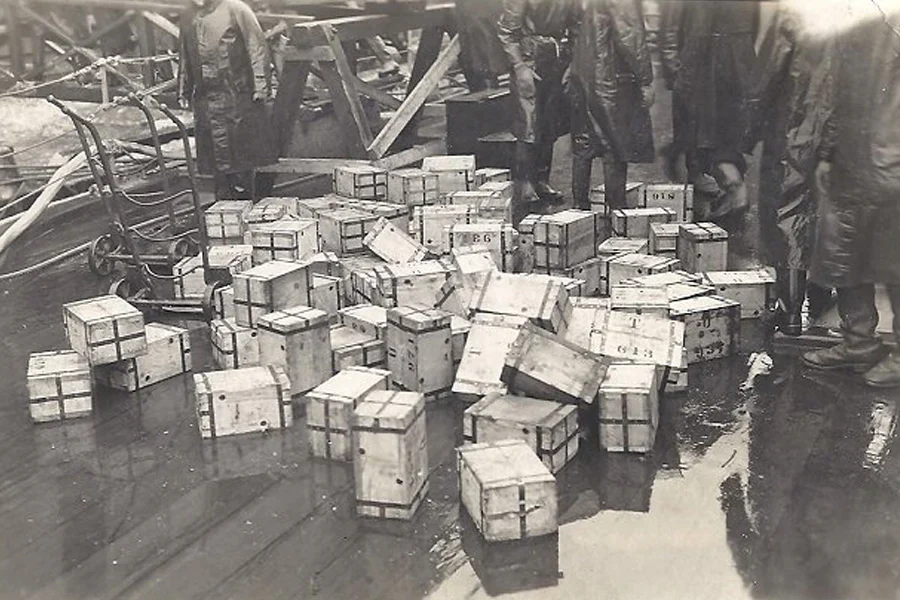
The most notorious forged bank notes scheme in history was Operation Bernhard, a Nazi plot designed to bring down the British economy during World War II. Initiated in 1942 under SS Major Bernhard Krüger, this operation assembled 142 Jewish prisoners with printing expertise at Sachsenhausen concentration camp .
The prisoners were forced to create near-perfect counterfeit British pounds, studying over 150 different security marks to replicate Bank of England notes flawlessly. By the end of 1944, the operation was producing nearly one million counterfeit notes monthly. According to declassified CIA documents, the total face value of forged bank notes created exceeded £135 million—equivalent to approximately $561 million at the time .
The Nazis used these forged bank notes to pay foreign spies, purchase war supplies, and attempt to trigger hyperinflation in Britain. The quality was so exceptional that many notes circulated undetected for years after the war, forcing the Bank of England to completely redesign its currency with new security features including metallic threads .
Peru: The Modern Counterfeit Capital
While Operation Bernhard represents historical scale, Peru has emerged as the contemporary center of forged bank notes production. This South American nation now produces an estimated 60% of the world’s counterfeit US dollars, with over $103 million in fake bills seized in the past decade alone .
Peruvian counterfeiters have developed sophisticated techniques that create what experts call “the finest fake money on the planet.” Using offset printing machines and hand-finishing techniques, criminal organizations produce forged bank notes capable of passing casual inspection. One 2012 operation uncovered by US Homeland Security Investigations involved over $2 million in high-quality counterfeit currency being smuggled into the United States concealed in book bindings and photo albums .
The economic incentives are substantial—counterfeiters can earn $20,000 for every $100,000 in fake bills produced. These forged bank notes are distributed globally using established drug trafficking routes, making the operation difficult to dismantle .
The Superdollar Mystery
Perhaps the most politically charged forged bank notes scheme involves the “superdollar”—extremely high-quality counterfeit $100 bills that began appearing in the 1980s. These sophisticated fakes feature security elements so advanced that they suggest state sponsorship, with North Korea frequently accused of production.
While not matching Operation Bernhard’s volume, superdollars represent the pinnacle of forged bank notes technology. The bills utilize similar paper composition to genuine currency and replicate intricate security features including security threads and microprinting. Their distribution across multiple continents suggests organized state-level involvement in their production and circulation.
Detection and Prevention in the Digital Age
The fight against forged bank notes has evolved dramatically. Modern detection employs machine learning algorithms and deep learning techniques that can identify counterfeit currency with increasing accuracy. Recent research demonstrates that artificial neural networks can detect fake bills with 74.6% accuracy rates, while advanced optical coherence tomography provides non-destructive analysis of banknote substrates .
Central banks continuously update security features to stay ahead of counterfeiters. Modern forged bank notes detection relies on multiple verification methods including watermarks, holographic strips, color-changing inks, and ultraviolet features. The “Feel, Look, Tilt” method remains the standard for manual verification, emphasizing texture examination, visual inspection, and angle-dependent security elements .
The Economic Impact of Forged Currency
The circulation of forged bank notes undermines economic stability by eroding trust in currency and potentially triggering inflation. When counterfeit money enters circulation, it effectively increases the money supply without corresponding economic value, diluting purchasing power.
Historical examples demonstrate the severe consequences of large-scale counterfeiting. Operation Bernhard forced Britain to withdraw entire currency series from circulation. Modern forged bank notes operations cost businesses millions annually in losses and prevention measures, while governments invest heavily in security features and law enforcement efforts.
Conclusion
From Nazi concentration camps to Peruvian printing facilities, the history of forged bank notes demonstrates that counterfeiting remains a persistent threat to global financial systems. While technology provides increasingly sophisticated detection methods, counterfeiters continue evolving their techniques. Understanding these historical schemes helps financial institutions, businesses, and individuals remain vigilant against the circulation of forged bank notes in an increasingly complex monetary landscape.
The battle between counterfeiters and currency issuers continues, with each side developing more advanced technologies. As digital payments increase, the nature of forged bank notes may evolve, but the fundamental challenge of ensuring currency authenticity remains as relevant today as during Operation Bernhard.