

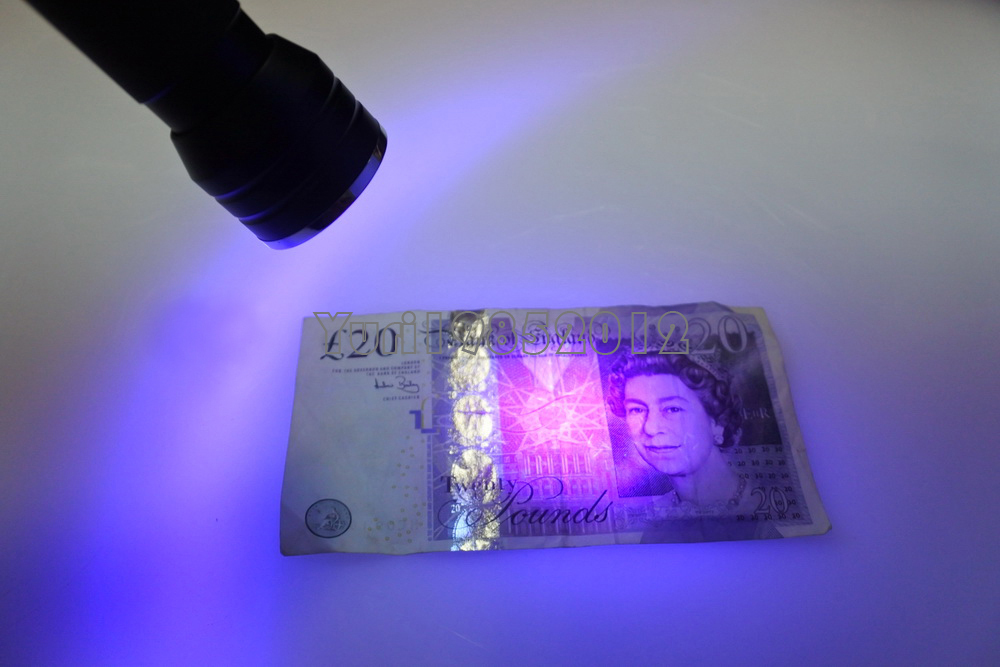
Fortunately, advancements in Artificial Intelligence (AI), Machine Learning (ML), and Deep Learning (DL) are transforming how forged bank notes are detected. These intelligent systems offer automated, accurate, and scalable solutions capable of identifying counterfeit currency in real time.
Forged bank notes continue to pose a serious threat to financial systems around the world. As counterfeiters adopt increasingly sophisticated printing technologies and digital replication methods, traditional currency verification techniques are struggling to keep pace. From retail stores to major banks, the circulation of forged bank notes leads to financial losses, reduced consumer trust, and operational inefficiencies.
The Growing Problem of Forged Bank Notes
Forged bank notes are unauthorized reproductions of legitimate currency designed to mimic real banknotes in appearance and texture. Modern counterfeiters replicate key security features such as:
- Watermarks
- Security threads
- Holograms
- Microprinting
- UV-reactive elements
- Serial numbers
In the past, manual inspection and UV detection systems were sufficient to detect basic counterfeits. However, today’s forged bank notes can imitate even advanced security features, making traditional detection methods less reliable.
The global financial ecosystem depends on trust. When forged bank notes enter circulation, businesses and consumers suffer financial losses, and confidence in the currency system declines. This growing threat demands smarter detection mechanisms.
Limitations of Traditional Detection Methods
Historically, counterfeit detection relied heavily on human inspection. Bank tellers, cashiers, and security personnel examine currency by checking its texture, color consistency, and embedded security features. While effective for obvious counterfeits, manual inspection is:https://finance.cornell.edu/sites/default/files/detect-counterfeit.pdf
- Time-consuming
- Inconsistent
- Prone to human error
- Inefficient in high-volume environments
Machine-based detection systems, such as UV scanners and currency counters, improved efficiency. However, as forged bank notes become more sophisticated, even these machines struggle to detect high-quality counterfeits.
This gap in reliability has driven the adoption of AI-powered solutions.
Machine Learning for Detecting Forged Bank Notes
Machine Learning algorithms analyze numerical and visual patterns extracted from banknote images. Instead of relying solely on visible security features, ML models detect subtle statistical variations that differentiate genuine currency from forged bank notes.
Commonly used ML algorithms include:
- Support Vector Machines (SVM)
- K-Nearest Neighbors (KNN)
- Random Forest
- Decision Trees
- Neural Networks
These models evaluate features such as variance, skewness, entropy, texture patterns, and edge distributions derived from wavelet-transformed images. Once trained on labeled datasets of real and counterfeit banknotes, the algorithms can classify new banknotes with impressive accuracy.
Random Forest models, in particular, have shown strong performance due to their ability to handle complex feature relationships and reduce overfitting.
Deep Learning and CNNs: A Major Breakthrough
While traditional machine learning requires manual feature extraction, Deep Learning—especially Convolutional Neural Networks (CNNs)—has dramatically improved forged bank notes detection.
CNNs automatically learn hierarchical features directly from raw banknote images. Instead of engineers manually selecting features, the network identifies:
- Ink distribution irregularities
- Micro-text distortions
- Texture inconsistencies
- Edge variations
- Print quality defects
Because CNNs process images through multiple convolutional and pooling layers, they can detect subtle patterns invisible to the human eye. This makes them particularly effective against high-quality forged bank notes that mimic physical security features.
In comparative studies, CNN-based models consistently outperform traditional ML algorithms in accuracy, precision, recall, and F1-score. Their ability to generalize across various denominations and lighting conditions makes them suitable for real-world deployment.
Real-Time Deployment in Financial Systems
One of the most significant advantages of AI-based detection systems is real-time processing capability. These systems can be integrated into:
- ATMs
- Bank verification terminals
- Retail checkout systems
- Cash counting machines
- Self-service kiosks
When a banknote is scanned, the system instantly analyzes the image and determines whether it is genuine or a forged bank note. This immediate response prevents counterfeit currency from entering circulation and reduces operational risks.
Cloud-based and edge computing deployments further enhance scalability, allowing both small retailers and large financial institutions to implement secure authentication systems.
Benefits of AI-Powered Forged Bank Notes Detection
AI-driven systems provide several key advantages:
- Higher Accuracy: Deep learning models detect complex counterfeit patterns with superior precision.
- Reduced Human Error: Automated systems eliminate reliance on subjective human judgment.
- Scalability: Suitable for high-volume cash environments.
- Cost-Effectiveness: Minimizes financial losses due to counterfeit acceptance.
- Enhanced Financial Security: Strengthens public trust in currency systems.
As counterfeit methods evolve, AI systems can be retrained with new data, ensuring continuous improvement and adaptability.
The Future of Forged Bank Notes Detection
The fight against forged bank notes will continue to evolve. Emerging technologies such as Vision Transformers, hybrid AI models, and multimodal detection systems are expected to further enhance counterfeit detection accuracy.
By leveraging machine learning and deep learning, financial institutions can stay ahead of increasingly sophisticated counterfeiting operations. The integration of AI into currency authentication represents a major advancement in global financial security.
Conclusion
Forged bank notes remain a significant challenge for economies worldwide. Traditional inspection methods are no longer sufficient against advanced counterfeit techniques. Machine Learning and Deep Learning—especially Convolutional Neural Networks—provide powerful, automated solutions capable of detecting forged bank notes with remarkable accuracy.
As AI technologies continue to advance, the future of counterfeit detection looks more secure, efficient, and reliable than ever before.
If you’d like, I can now provide: